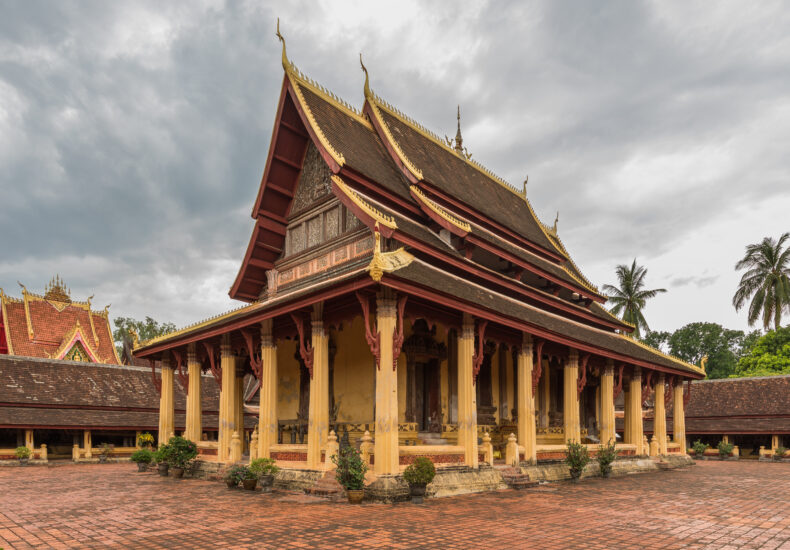
Vat Sisaket – The Last Original Temple of Old Vientiane
Vat Sisaket is one of the most historically important temples in Vientiane and a must-see landmark for anyone who wants to understand the deeper story of Laos. Located in the heart of the capital, right beside the former royal palace and Hor Phra Keo, the temple was built in 1818 during the reign of King Anouvong. Although it stands quietly today, its walls hold the memory of Vientiane’s most dramatic chapter—the city’s destruction in the early 19th century. When much of Vientiane was burned, Vat Sisaket survived, becoming one of the very few structures that still reflect how the capital looked before colonial influence and modern development.
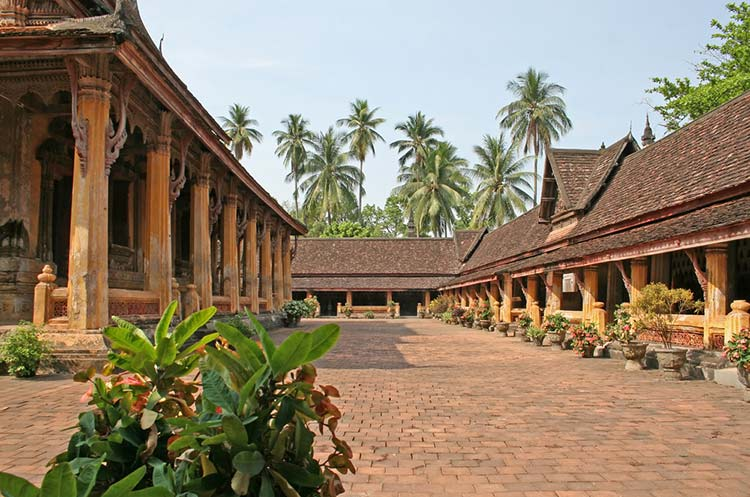
What makes the temple especially meaningful is the harmony of its architecture and artwork. Unlike most Lao temples, Vat Sisaket was built with a unique Siamese-influenced style, featuring a five-tiered roof and a wide cloister surrounding the main hall. This design is believed to be one of the reasons the temple remained intact during the invasion. Walking through the cloister today, visitors see thousands of small Buddha statues arranged in tiny wall niches—over 6,000 images made from clay, bronze, and wood. The effect is deeply peaceful, almost meditative, as if time slows down inside the shaded courtyard.
Inside the main ordination hall, faded murals still decorate the walls. Though softened by time, the paintings offer rare insight into old Lao life and Buddhist stories that were once told to local communities. Unlike newer temples that have been repainted many times, Vat Sisaket has preserved its authenticity, allowing visitors to experience a genuine glimpse of the past. The temple also houses ancient manuscripts, wartime-damaged Buddha images, and a remarkable Naga-protected Buddha statue—an important symbol in Lao spiritual culture.
Vat Sisaket is not just a museum; it remains an active monastery. Monks and novices live, study, and chant within the compound, giving visitors the sense that history and daily life are woven together. This combination of living tradition, historical significance, and delicate artistry is what makes the temple a meaningful stop for travelers. It is centrally located, easy to visit, affordable, and filled with quiet corners that feel untouched by time.
For anyone exploring Vientiane, Vat Sisaket is more than a sightseeing point—it is a doorway into Lao memory, resilience, and spiritual culture. It is one of the few places where the old city still breathes, inviting visitors to slow down, walk gently through its corridors, and appreciate the centuries of craftsmanship that continue to survive.