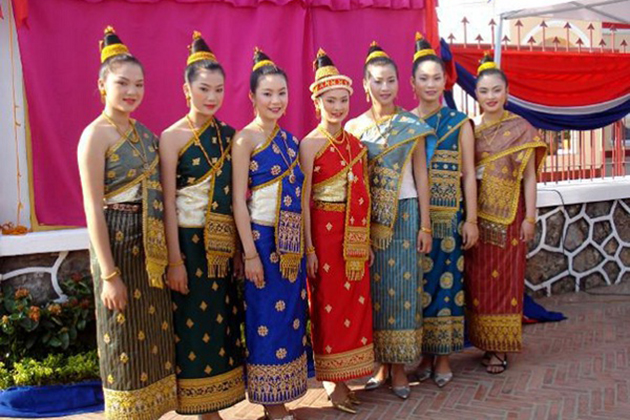
The Lao Sinh: Everyday Beauty Woven into Daily Life
In Laos, seeing women wearing a sinh—the traditional Lao skirt—is not a special occasion or a performance for visitors. It is simply everyday life. From schools and government offices to family gatherings and daily errands, the sinh is a natural and respected part of how many Lao women dress.
The sinh is more than clothing. It reflects culture, identity, and quiet elegance. Typically worn with a blouse or shirt, it is practical, comfortable, and graceful at the same time. Different patterns, colors, and fabrics can reflect regional styles, age, or the occasion, but the idea remains the same: dressing neatly and respectfully is part of daily life in Laos.
It is very common to see students wearing sinh as part of their school uniform, and office workers wearing sinh in ministries, banks, and local businesses. Teachers, civil servants, and even shop staff often choose the sinh for work. This is not considered formal or old-fashioned—it is simply normal. The sinh fits naturally into modern Lao life.
For visitors, this can be a beautiful and memorable sight. Many travelers notice how elegant and confident Lao women look in sinh and wonder if it is only worn for ceremonies. In reality, it is worn because it belongs to everyday life, not because of an event.
If you are a foreign visitor and would like to say something kind, a simple and respectful compliment such as “Your sinh is very beautiful” is usually warmly received. Lao people generally appreciate genuine and polite compliments, especially when they come from curiosity and respect rather than comparison or judgment. A friendly smile often opens an easy conversation.
For those working, studying, or volunteering in Laos, understanding this helps build cultural awareness. The sinh represents values that are important in Lao society—respect, modesty, and pride in tradition, lived quietly rather than loudly displayed.
For readers of LaosTravelHub, noticing the sinh is a reminder that Lao culture is not something kept in museums or festivals alone. It is alive, worn daily, and carried forward naturally by the people themselves. Taking a moment to appreciate this simple beauty is one of the easiest ways to connect with Laos on a deeper, more human level.