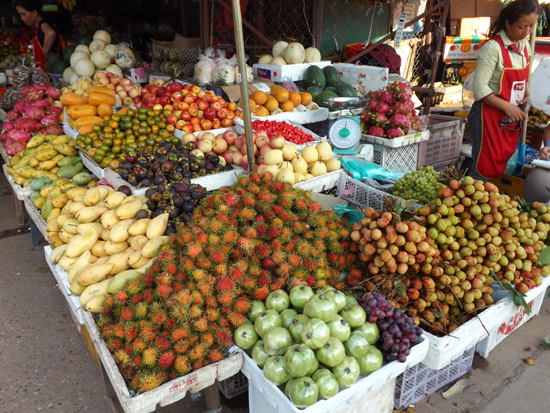
Lao Fruits You Shouldn’t Miss: Fresh Flavors Hard to Find Elsewhere
One of the quiet joys of traveling in Laos is discovering local fruits that taste very different from what many visitors know from supermarkets in Europe or other parts of the world. Fruits in Laos are usually eaten fresh, seasonal, and often enjoyed with simple dips or just as they are.
Mango is one of the most loved fruits in Laos, and there are many local varieties. Lao people often enjoy mango not only when it is ripe and sweet, but also when it is still green. Green mango is crisp and slightly sour, commonly eaten with chili-salt or fermented fish dip. Ripe mangoes, on the other hand, are fragrant, juicy, and naturally sweet, with a stronger aroma than many exported mangoes found overseas.
Longan is another favorite, especially in season. Lao longan is known for its intense sweetness and floral fragrance. The flesh is soft, juicy, and very aromatic. Many visitors are surprised by how much sweeter and fresher it tastes compared to longan sold abroad.
Mangosteen is widely loved for its balance of sweetness and gentle acidity. The white flesh inside is soft, refreshing, and almost melts in your mouth. It is often described as one of the most pleasant tropical fruits to eat on a hot day.
Coconut in Laos is also special. Fresh young coconuts are very fragrant, with naturally sweet coconut water and soft flesh. There are several local types, and many travelers notice that the aroma and freshness are stronger than coconuts commonly found in foreign supermarkets.
Tamarind is enjoyed in two very different ways. Young tamarind is sour and crunchy, often eaten fresh with chili dip. Ripe tamarind is brown, sticky, and sweet-sour, commonly used as a snack or ingredient. The contrast between the two stages makes tamarind especially interesting for first-time visitors.
Pineapple in Laos is another pleasant surprise. Lao pineapples are often smaller, more fragrant, and sweeter, with a balanced acidity that feels lighter than many commercial varieties sold in Europe or North America.
Makok (a local wild olive-like fruit) is usually eaten raw and dipped in chili sauce. It has a fresh sour taste that might be unfamiliar but is very popular among locals as a snack.
Finally, boiled or steamed peanuts are commonly sold by street vendors and fruit carts. They are simple, warm, slightly salty, and very comforting—an everyday snack that many travelers grow to love.
For readers of LaosTravelHub, trying local fruits is one of the easiest and most enjoyable ways to connect with daily life in Laos. These fruits are fresh, seasonal, and deeply rooted in local habits. Even familiar fruits can taste completely new here—making fruit markets and street stalls a must-stop during your journey.