The Baci Ceremony: Understanding One of Laos’ Most Meaningful Traditions
The Baci ceremony, also known as Sou Khuan or wrist-tying, is one of the most important cultural traditions in Laos and is often experienced by foreign visitors during important moments or special welcomes.
Deeply rooted in Lao belief, the ceremony is based on the idea that every person has khuan, a form of spiritual energy or life force. This energy can become unsettled during major life events such as travel, illness, new beginnings, or emotional stress. The purpose of the Baci ceremony is to call the khuan back, restoring balance, strength, and well-being.
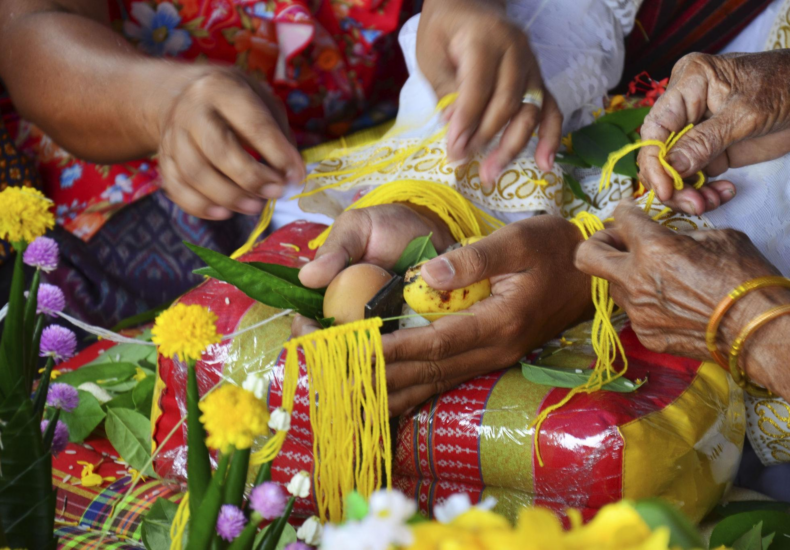
During the ceremony, elders or hosts offer spoken blessings while gently tying white cotton strings around the wrists of the person being honored. The white thread symbolizes purity, protection, and good intentions. The blessings usually focus on health, safety, happiness, success, and peace of mind. Although the ceremony may feel spiritual, it is not a strict religious ritual, but rather a meaningful cultural expression of care and respect.
The Baci ceremony is commonly held to welcome guests, celebrate weddings, mark childbirth, bless someone before or after a long journey, or support a person starting a new chapter in life. When foreigners are invited to participate, it reflects a deep level of hospitality and inclusion, often similar to being welcomed into a family.
For visitors unfamiliar with Lao culture, the ceremony can be simply understood as a symbolic blessing and a moment of shared goodwill. Accepting the wrist-tying with a smile and remaining calm during the blessings is considered respectful. Traditionally, guests are encouraged to keep the strings on their wrists for at least a few days or until they naturally fall off, as a sign of accepting the good wishes.
More than anything, the Baci ceremony represents human connection. It is a quiet but powerful moment where words, gestures, and intention come together. For many foreign visitors, participating in a Baci ceremony becomes one of the most memorable cultural experiences in Laos, offering insight into the country’s values of kindness, community, and mutual respect.