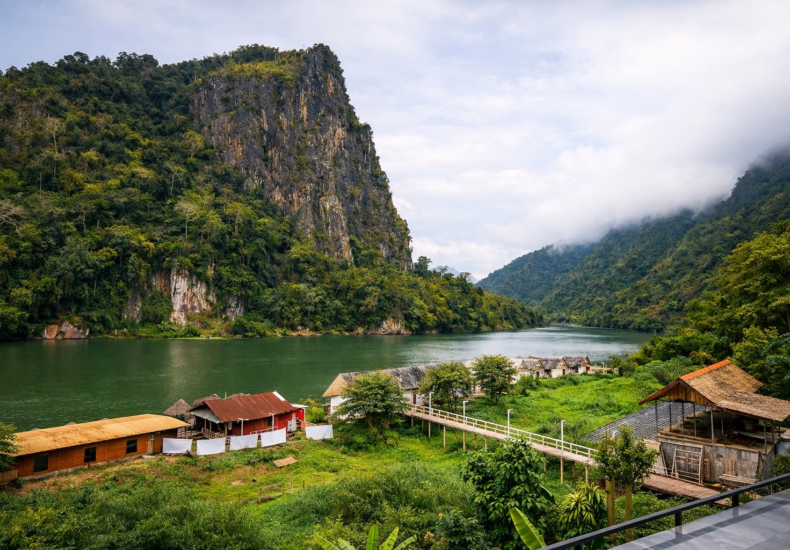
Nong Khiaw: A Quiet Mountain Escape in Northern Laos
Nong Khiaw is often described as a quiet mountain town, but to understand Nong Khiaw properly, it helps to see it as a place with both an “old” and a “new” side, shaped by geography, history, and gradual change rather than rapid development.
Historically, Nong Khiaw was a small riverside settlement along the Nam Ou River, where life followed the rhythm of farming, fishing, and river transport. The old part of Nong Khiaw reflects this past. Traditional wooden houses, small family-run guesthouses, and simple local shops still line parts of the riverbank. Life here feels slow and grounded. Early mornings are marked by mist rising from the river, fishermen preparing their boats, and villagers starting their day quietly. This older side of Nong Khiaw gives visitors a sense of how rural communities in northern Laos have lived for generations, closely connected to nature and the river.
Nong Khiaw also carries a deeper historical layer linked to the Indochina conflict. The surrounding mountains and caves were once used as shelters during wartime, and some of these caves remain accessible today. They serve as quiet reminders that this peaceful landscape was once part of a much more difficult period in Lao history. This background adds depth to the town’s calm atmosphere and explains why Nong Khiaw feels reflective rather than commercial.
The “new” Nong Khiaw has gradually developed around improved road access, the bridge crossing the Nam Ou River, and growing interest from travelers seeking nature-based experiences. On this side, newer guesthouses, eco-lodges, cafés, and small tour services have appeared. These developments are modest rather than flashy, but they have made the town more accessible and comfortable for visitors. The newer area is where travelers are more likely to find cafés with river views, trekking information, and accommodation designed specifically for international guests.
Despite this growth, Nong Khiaw has not transformed into a busy tourist town. The new and old parts exist side by side without strong contrast or tension. There are no large resorts or nightlife districts, and evenings remain quiet across the entire town. The newer developments tend to blend into the natural landscape, reflecting a local understanding that the mountains and river are the town’s main attraction.
Today, Nong Khiaw appeals to travelers who want more than sightseeing. Some come for trekking and viewpoints, others for photography, writing, or simply rest. The old part offers authenticity and a glimpse into everyday rural life, while the new part provides just enough comfort and services to make longer stays possible. Together, they create a balanced place where change has arrived slowly and thoughtfully.
Nong Khiaw’s story is not about rapid growth or reinvention. It is about continuity, adaptation, and coexistence between tradition and modest development. For visitors who take the time to observe both sides, Nong Khiaw reveals itself as more than a scenic stop — it becomes a place that quietly tells the story of northern Laos, past and present, through its landscape and its pace of life.