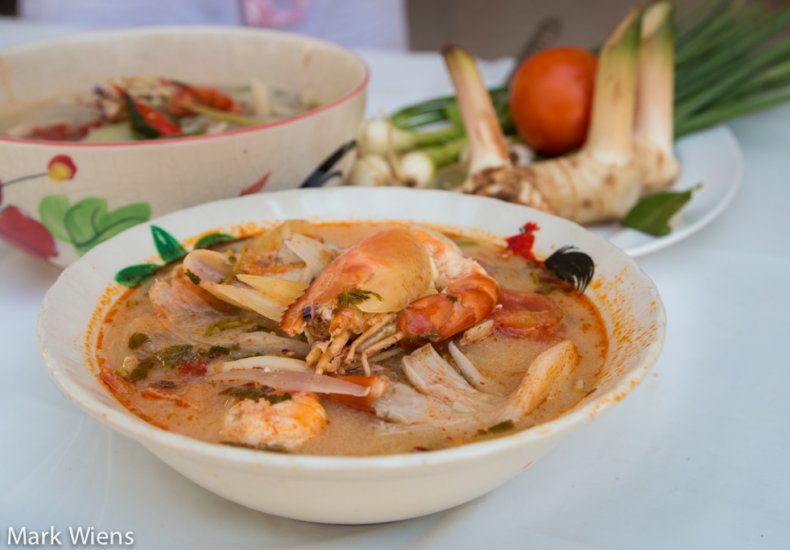
Galangal and Lao Coriander: Two Flavors at the Heart of Lao Cuisine
If you spend time eating with Lao families or trying local food, you may notice two ingredients appearing again and again: galangal and Lao coriander (often called phak phai or phak chi lao; in Isan Thai, hom pao). These herbs are central to the taste and aroma of many Lao dishes and are part of everyday cooking rather than something reserved for special occasions.
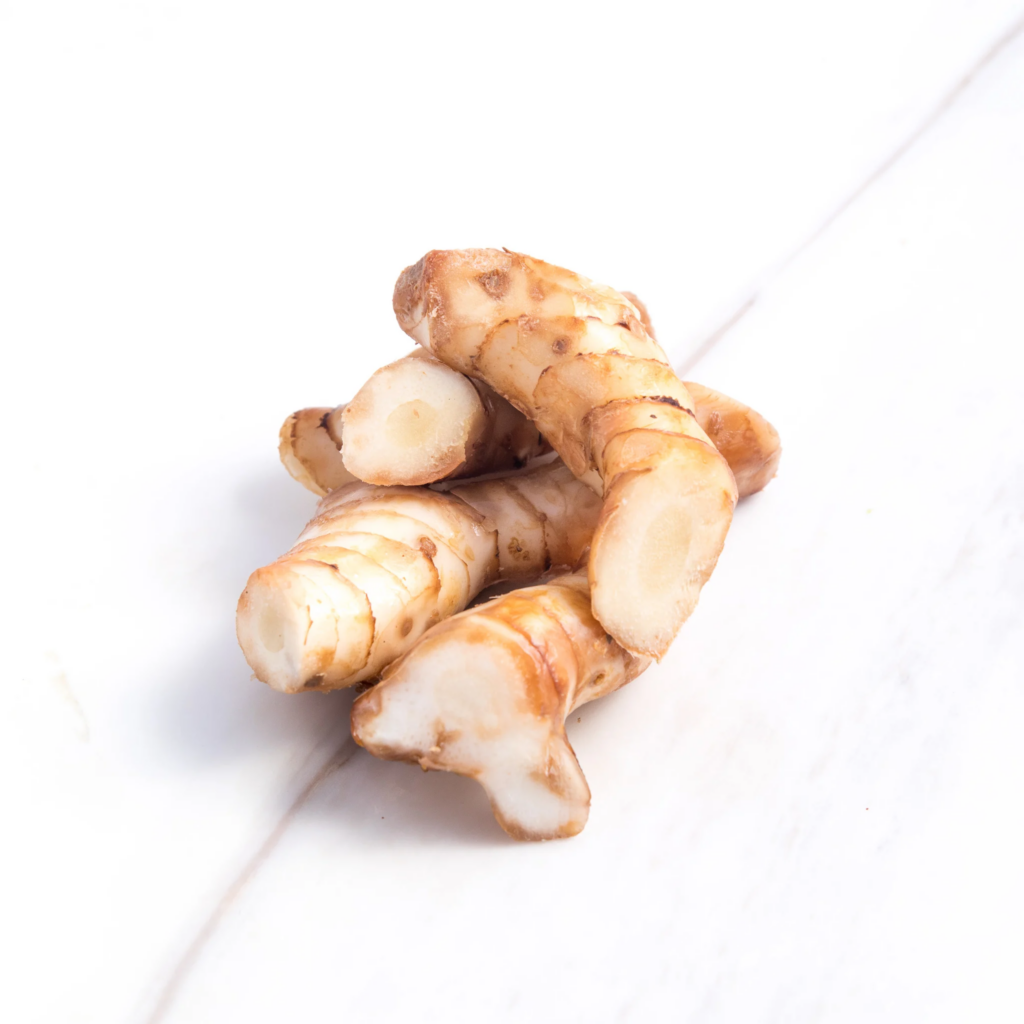
Galangal is a root similar to ginger, but with a sharper, more aromatic fragrance. In Lao food, it is often sliced or lightly crushed and added to soups, stews, and boiled dishes. Galangal gives food a clean, warming aroma that balances sour, salty, and spicy flavors. It is rarely overpowering when used properly, but it adds depth that many Lao people would immediately miss if it were not there.
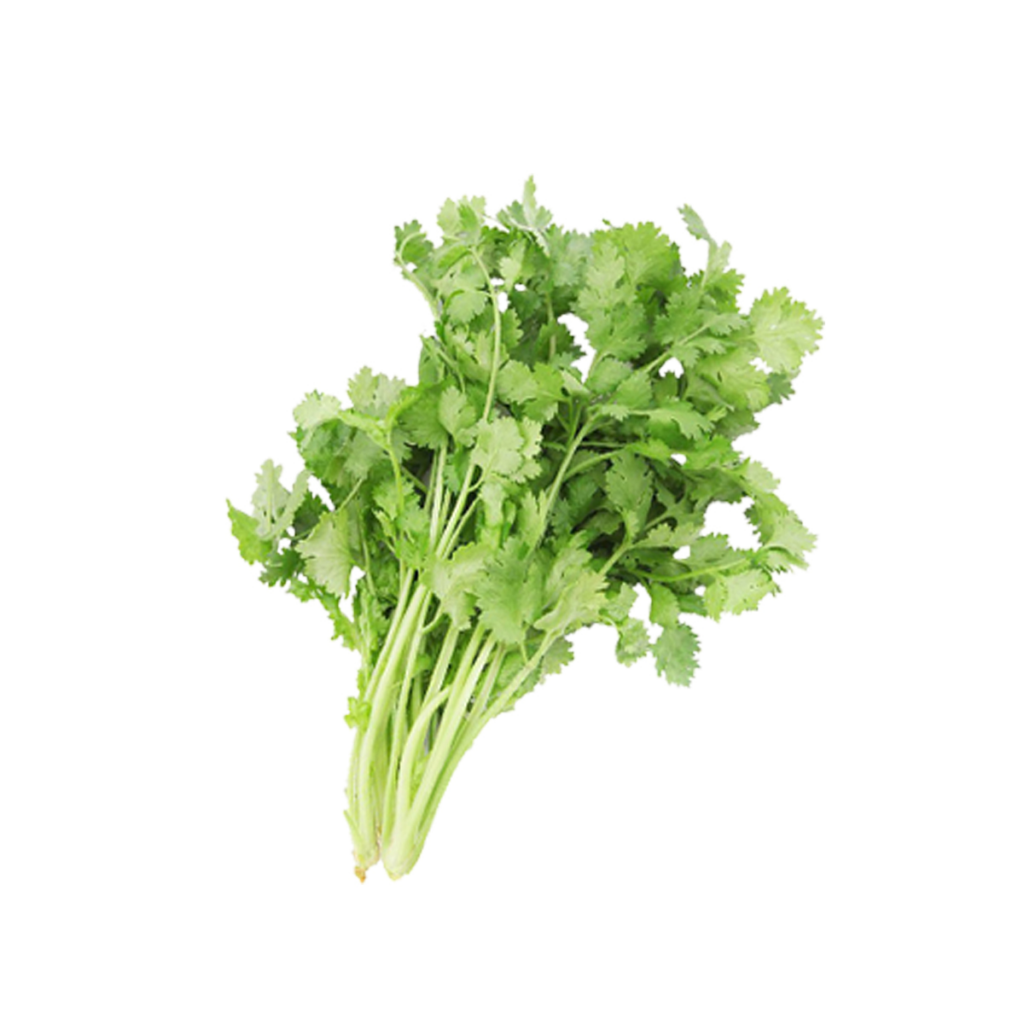
Lao coriander has a stronger, more herbal scent than regular coriander commonly found in Western cooking. It is used both fresh and cooked. Sometimes it is added at the end of cooking for fragrance; other times it is eaten raw alongside dishes. Its aroma is bold, fresh, and slightly peppery, and for Lao people, it is closely associated with comfort food and home cooking.
For many locals, these two ingredients are simply “normal.” They are what make food smell right and taste complete. However, for foreign visitors who are not used to strong herbal aromas, galangal or Lao coriander can feel intense at first.
The good news is that in Laos, it is perfectly acceptable to ask for adjustments. If you do not enjoy strong herbal flavors, you can politely say that you prefer no galangal or no Lao coriander in your dish. Most cooks and restaurant staff understand this and are happy to accommodate. Lao cuisine is flexible, and there is no expectation that visitors must eat everything exactly the local way.
On the other hand, if you enjoy herbs and fresh flavors, these ingredients are highly recommended. Many travelers who try them a few times begin to appreciate how they lift a dish and make it feel lighter and more aromatic.
For readers of LaosTravelHub, understanding galangal and Lao coriander helps make Lao food less intimidating and more enjoyable. Whether you choose to ask for less—or decide to embrace their bold fragrance—knowing what they are and why they matter will help you enjoy Lao cuisine with confidence and curiosity.