Li Phi Waterfall: Where Nature and Belief Meet in Southern Laos
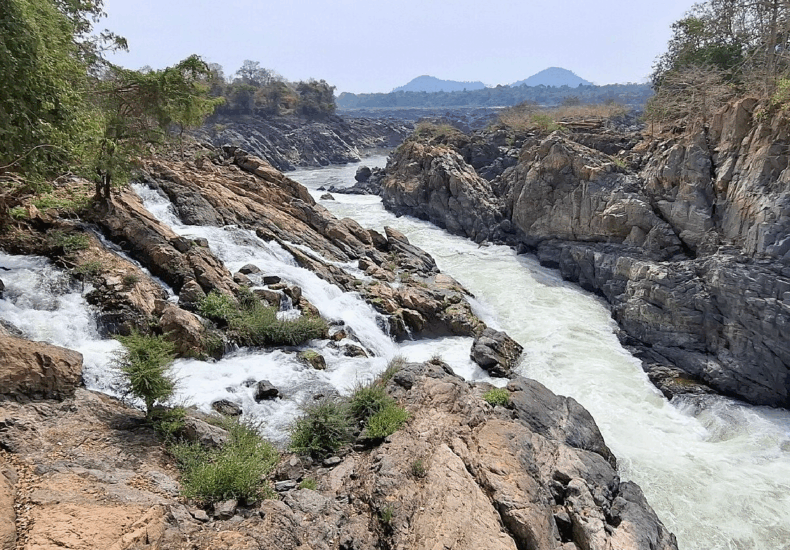
Li Phi Waterfall, also known locally as Tad Somphamit, is one of the most powerful and dramatic waterfalls in southern Laos. Located in the Si Phan Don (Four Thousand Islands) area near the Lao–Cambodian border, Li Phi is shaped by the immense force of the Mekong River as it narrows and crashes through sharp rock formations.
The name Li Phi carries deep meaning for local people. In the Lao language, “Phi” refers to spirits, and traditionally, this area was believed to be a place where bad spirits were washed away by the strong currents of the river. For generations, local communities have viewed Li Phi as both a natural boundary and a spiritually significant place, where the power of water represents cleansing, protection, and balance.
Historically, Li Phi has also played a practical role. During the French colonial period, the dangerous rapids here prevented boats from passing through, leading to the construction of a railway on Don Det to transport goods around the falls. Remnants of this history can still be felt in the area, adding another layer of significance to the site.
For Lao people, Li Phi is respected rather than treated as a place for leisure. The strong currents and sharp rocks command caution, and visitors are reminded that this is not a swimming waterfall. Instead, it is a place to observe, reflect, and appreciate the raw strength of nature. Many locals see Li Phi as a reminder of the Mekong River’s power and its role in shaping life along its banks.
Visitors to Li Phi are drawn by the sight and sound of the rushing water. From designated viewpoints and walkways, travelers can watch massive volumes of water force their way through narrow stone channels, creating white foam and thunderous noise. The contrast between calm river sections upstream and the violent movement at the falls is striking. During the rainy season, the waterfall becomes especially impressive, with higher water levels and stronger flow.
A visit to Li Phi usually takes one to two hours, allowing time to walk along the paths, observe the different angles of the rapids, and take photographs. The surrounding area is relatively undeveloped, which helps preserve the natural atmosphere. Visitors often combine Li Phi with other nearby attractions in Si Phan Don, such as Don Det and Don Khon, making it part of a relaxed day of exploration.
Li Phi Waterfall is not just a scenic destination; it is a place where nature, history, and belief come together. For travelers seeking to understand southern Laos beyond its landscapes, Li Phi offers insight into how the Mekong River is respected, feared, and deeply woven into local culture.