Lao Food: What to Try, What You May Love, and How to Eat Comfortably
Lao food is often described as simple, fresh, and deeply connected to local ingredients and daily life. It is not designed to impress through presentation, but through balance—between herbs, spice, bitterness, and texture. For many international visitors, Lao food can feel both familiar and surprising at the same time.
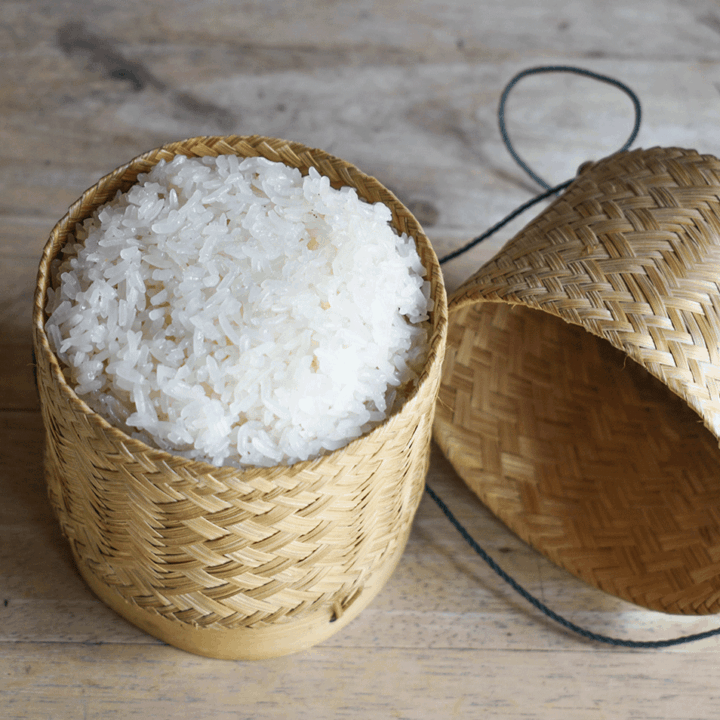
Sticky rice is at the heart of almost every Lao meal. It is eaten by hand, rolled into small bites, and used to accompany dishes rather than replace them. For visitors, this can be an enjoyable and interactive way of eating, but it is also perfectly acceptable to use a spoon if that feels more comfortable.
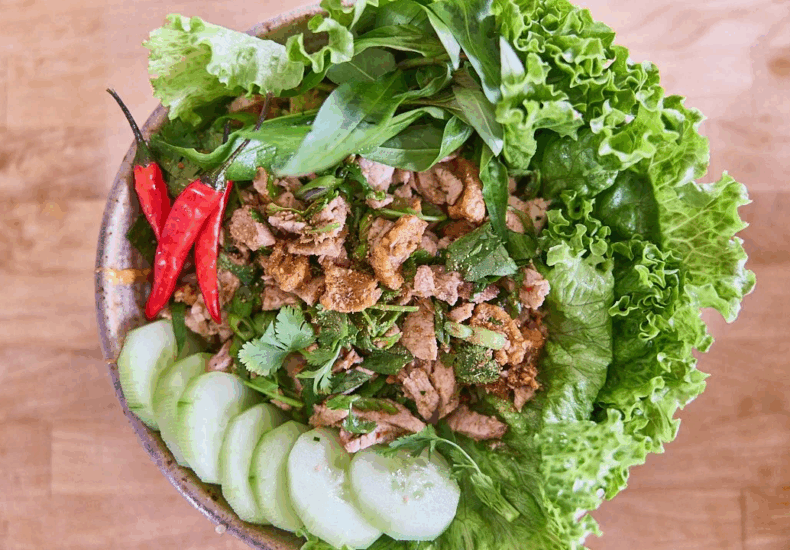
One of the most well-known dishes is laap, often considered a national dish. It is a finely chopped salad made with meat, fish, or mushrooms, mixed with herbs, lime, and toasted rice powder. In local settings, laap may be served very spicy or even prepared with raw ingredients. For international visitors, it is completely acceptable to ask for laap that is cooked and mildly spiced.
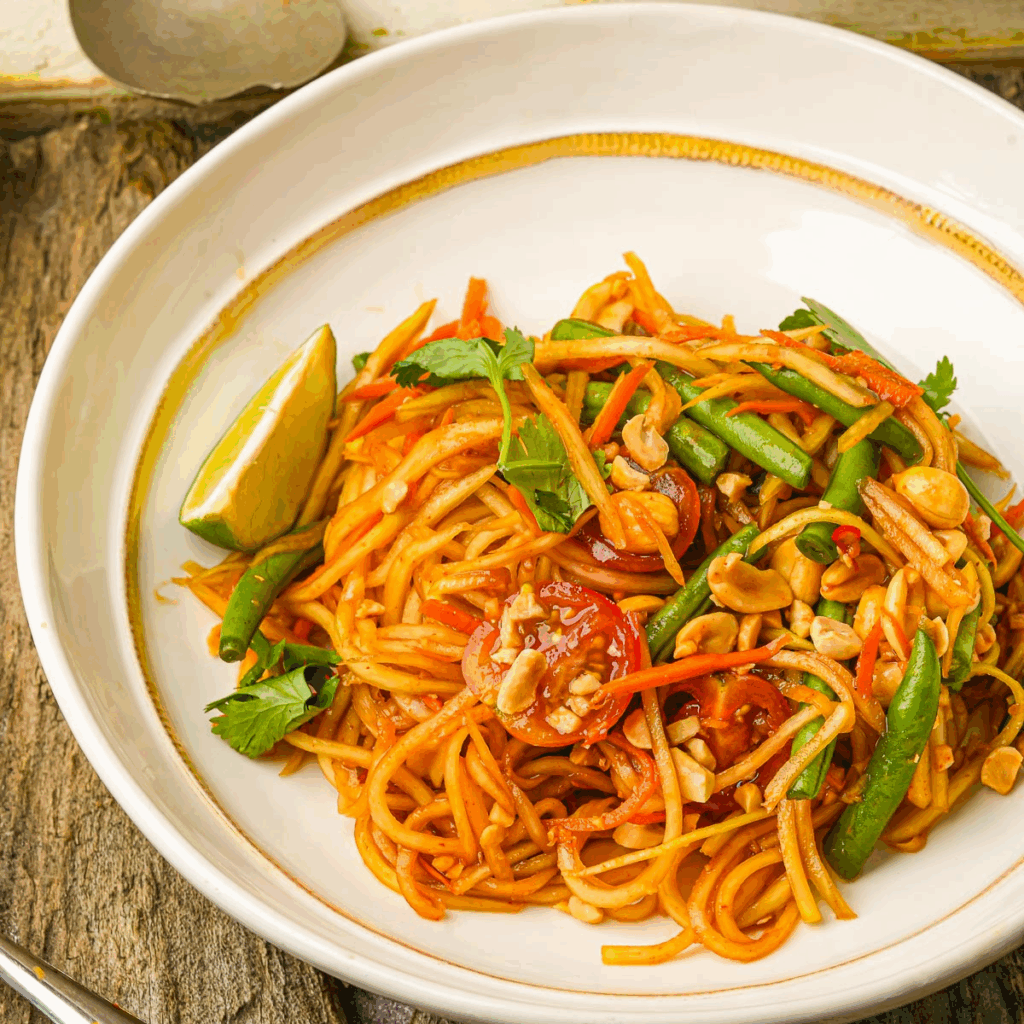
Another popular dish is tam mak hoong (green papaya salad). This dish can range from fresh and slightly sour to very spicy and fermented. Visitors who are new to Lao food should ask for a “less spicy” version and avoid fermented ingredients if they have a sensitive stomach.
For something gentler, khao piak sen, a warm rice noodle soup, is often a safe and comforting choice. It is commonly eaten for breakfast but is available throughout the day and is well suited to visitors who prefer mild flavors.
Lao food is generally safe when prepared in clean environments, but visitors should be mindful, especially when eating outside major towns. Raw dishes, fermented sauces, and very spicy food can be difficult for those not accustomed to them. If you are unsure, choosing cooked dishes, avoiding raw meat or fish, and eating in well-reviewed restaurants is advisable.
When ordering, it is helpful to communicate clearly. Simple phrases such as “not spicy,” “little chili,” or “fully cooked” are widely understood in restaurants that serve foreigners. Do not feel uncomfortable making these requests; they are common and respected.
In Vientiane Capital, there are many restaurants where international visitors can experience Lao food in a clean and approachable setting. Areas along the Mekong riverfront, the city center, and neighborhoods popular with expatriates often offer menus with clear descriptions and adjustable spice levels.
Restaurants that cater to foreigners typically understand dietary preferences and are used to explaining dishes. These places are ideal for a first introduction to Lao cuisine before exploring more local eateries.
Lao food is best enjoyed with curiosity and openness. Encourage friends to start with mild dishes, ask questions, and take their time. Lao meals are not rushed, and sharing food is part of the experience. Trying Lao food is not just about taste—it is about understanding how people eat, gather, and live.
With a little care and the right choices, many international visitors find Lao food comforting, memorable, and something they look forward to eating again.