How to Use the Laos–China Railway
A Simple Guide for Travelers and Families in Laos
The Laos–China Railway has completely changed the way people travel around Laos. What used to take five or six hours by road can now be done in one or two hours by train. The journey is smooth, clean, and very comfortable, making it an excellent option for families with children, visitors who want to save time, or anyone who prefers safe and easy transportation.
Booking a ticket is simple once you know the options. Travelers inside Laos can book through the LCR Ticket app, at train stations, or through travel agents in Vientiane, Vang Vieng, Luang Prabang, and Oudomxay. The official app is the most convenient, but it requires passport information and sometimes payment verification. Buying tickets directly at the station is the easiest method for many visitors, especially if they have children or prefer speaking with staff. During busy seasons such as Pi Mai Lao, long weekends, and Chinese holidays, tickets sell out quickly, so planning ahead is important.
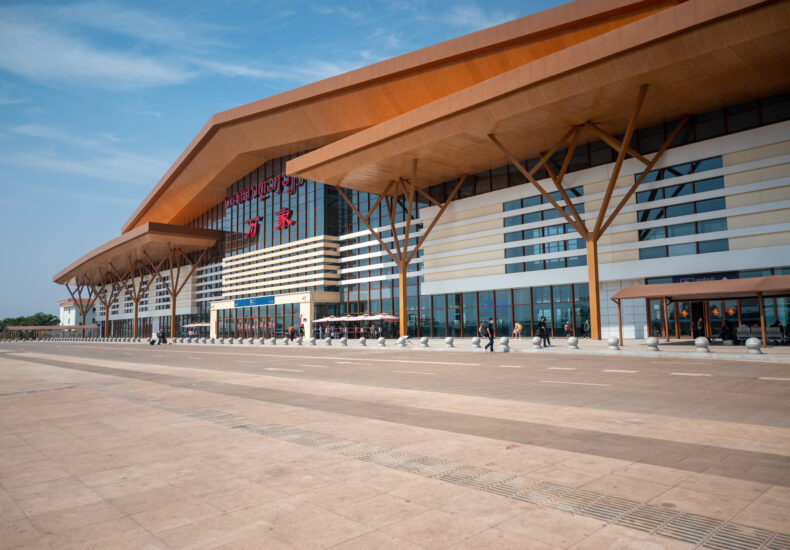
The main stations used by foreign travelers are Vientiane, Vang Vieng, Luang Prabang, and Boten at the China border. Each station is located slightly outside the city, so a tuk tuk or taxi is needed to reach the entrance. Vientiane Station is about 20–25 minutes from the city center, and Vang Vieng Station is around ten minutes from town. Luang Prabang Station sits on a small hill about twenty minutes from the center. All stations are modern, clean, and spacious, but travelers should arrive at least one hour before departure, as security screening and boarding take some time.
Families will find the train very comfortable. The seats are wide, the air-conditioning is cool, and the ride is smooth enough for children to sleep. Strollers can be folded and stored on the luggage racks. Babies and small children can sit on a parent’s lap without needing an extra ticket, but it is always more comfortable to buy a seat for them on longer journeys. Toilets are available in every carriage, though they may not always have tissue, so carrying your own is helpful. The train does not sell much food, so snacks, sandwiches, and water should be brought along, especially for young children.
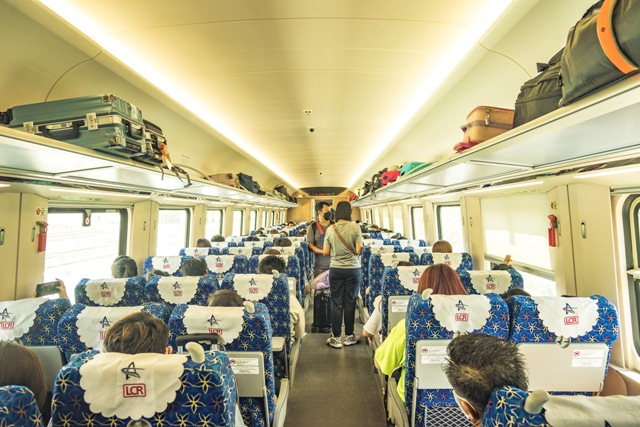
Before boarding, passengers go through security similar to an airport. Liquids, snacks, and baby items are allowed, but large tools, knives, fireworks, and certain electronic devices are not. Bringing fresh durian is not recommended, as the strong smell is not allowed on the train. Once inside, announcements are made in Lao, Chinese, and English, making it easy for foreigners to understand the stops.
The railway is not just fast but also scenic. The view changes from rice fields to limestone mountains and wide rivers. Travelers moving between Vientiane, Vang Vieng, and Luang Prabang enjoy some of the most beautiful natural landscapes in Laos without the stress of driving. It is also far safer than traveling by road, especially during rainy season or heavy traffic periods.
For travelers planning a full journey, Vientiane to Vang Vieng takes about an hour, Vang Vieng to Luang Prabang takes roughly another hour, and Luang Prabang to the northern provinces takes a little longer depending on the stops. The high-speed trains (denoted by “C” class) are the fastest and most modern, while the slower trains (marked “K”) stop more often but still provide a comfortable ride.
Using the Laos–China Railway is one of the best ways to explore the country. It saves time, reduces stress, and makes traveling with children much easier. Whether you are visiting Laos for a short holiday or planning a longer stay, the train is a reliable and enjoyable experience that gives you more time to enjoy the destinations instead of sitting on the road.